Once Upon a Time in the Vest

Showing posts with label Robin Lingle. Show all posts

Sunday, September 29, 2013

Vol. 3 NO. 55 April , 1964

APRIL 1964


In our last report we promised you two world records and the return to competition of one of the icons in the sport. That is coming up. But first let's go to Santa Barbara for the Easter Relays on March 28 where there are many fine early season marks and almost a collegiate record. Remember the sloppy officiating in the indoor meets reported in the March issue? Well the outdoor season isn't starting any better.


Fresno State's Charles Craig is the victim. He triple jumps 52-1½ to better the 51-9¼ collegiate record set by Luther Hayes of USC in 1962 but there is no wind gauge.


hoping this is the Charles Craig of the story
 
 
Whoever was in charge of the gauge had taken it home. While it was in use it had recorded only one race in excess of the limit and witnesses say the wind was minimal at the time of Craig's jump but without a wind reading, record recognition is doubtful.


The mile relay is won by the Camp Pendleton Marines in 3:08.9, the fastest time of the season. One second back are the Striders who are handicapped by a 49.2 lead off leg from Mike Larabee.
Mike will be a tad faster in Tokyo
The Striders beat the LATC in an unremarkable distance medley, unremarkable except that the lead off man for the Striders is comebacking Olympic 400 champ, Otis Davis, who eases into his season with a 48.6 split.

Otis Davis
 
The best race of the day is the 880 relay where Adolph Plummer of the Striders takes the baton five yards down to Darryl Newman of Fresno State and blows by to win by three with a 20.4 split.

Things heat up the next week with three solid meets. The Texas Relays are held on April 3 and 4. In what is the only open division race, Ollan Cassell clocks the fastest 440 this year, 46.6. Perhaps more significant is the second place 47.0 of high schooler Blendon Johnson who beats established stars Earl Young, Ted Nelson and Ray Saddler. LSU's Billy Hardin, son of 1936 Olympic champion Slats Hardin, shows genetics weren't wasted on him as he blisters the 400IH in 50.8 to top the world list.
 
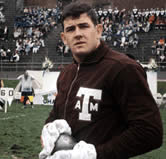
 In the frosh-junior college division Texas A&M freshman Randy Matson opens eyes with an amazing PR of 62-11½.

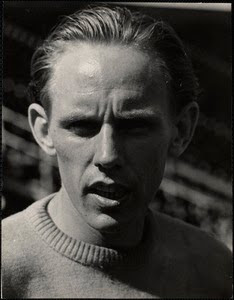
As good as those marks are, the star of the day is Missouri's Robin Lingle. Lingle, a transfer from the US Military Academy, anchors the Tigers to wins in the two mile relay and the distance medley with splits of 1:48.3 and 4:02.3 in posting the year's fastest times, 7:22.3 and 9:45.2. He is voted athlete of the meet.

In 1964 when an athlete wanted to continue competing after his college career had ended there were three choices: join the service and compete for the Marines, Navy or Army, join a club or compete unattached. The first required a serious commitment. The last required the expense of getting to meets. Club teams flourished. The Grand Street Boys Club, the Pasadena AA, the Striders, the Santa Clara Valley Youth Village, the Pacific Coast Club, the San Francisco Olympic Club, the LA Track Club provided coaching and travel and thus were the choice of many post collegiate stars.

On April 4 two club teams had dual meets with colleges. The Pasadena AA took on nearby Occidental and the Striders traveled to Tempe to run against college powerhouse Arizona State.

Whereas the PAA-Oxy meet was the lesser of the two, no one went home disappointed after witnessing the performance of shot put record holder Dallas Long. As you may remember, Long is in dental school at USC, a commitment that kept him from competing until the last two weeks of the season last year. Although he produced the best mark in the world, 63-9, it was only by and inch and one had to wonder whether his cloak of invincibility is gone. That doubt is erased this afternoon. In his first meet of the year Long throws over 65 feet three times and his 65-11½ breaks his world record by an inch. Long is surprised, “I felt like I was in the twilight zone, it came so easy”.

Now we are in Tempe where ASU's 220 world record holder, Henry Carr, takes the baton in the 440 relay well down to the Strider's Adolph Plummer. Though he doesn't catch the 440 record holder, he gives an indication of what is to come by gaining five yards. Minutes later he is in the blocks for the 100. Gerry Ashworth of the Striders leads for 80 yards but Carr comes on strong at the end to win in 9.5 for both. This victory is not without cost. The Arizona State star suffers a “muscle injury” during the race. Henry Carr is the odds on favorite for the Olympic gold at 200 meters in six months. Indeed he is the only man to run faster than 20.5 with two 20.4s and his WR of 20.3. Obviously the wise thing to do is watch the rest of the meet from a spot on the infield. No, not Henry. He is a spit on it, rub a little dirt on it, get back in the game kind of guy. The 220 is coming up and he will take another shot at Adolph Plummer.

For some reason they are in the lanes with the tightest curve, Plummer in one, Carr in two. This is no problem for the ASU star. He leads by four yards off the curve and increases the margin to six at the tape. The watches read 20.2. Once again the Detroit native has broken the record. Plummer's 20.8 is hardly noticed.

And now for the return of the former world record holder and Olympic champion who hasn't competed since the 1960 Olympics. This would be Charlie Dumas, the first man to jump seven feet, but only a figure in history for the last four years. Where has Charlie's road taken him? After the Games he tried out for the San Diego Chargers but was cut early on. As he was never paid, his AAU eligibility was reinstated just last month. An effort to join the Marines had come to naught because of a bad knee. In the time that he was out of the track spotlight he returned to USC and earned his teaching credential. Now Charlie is employed by the Inglewood, CA school district. As satisfying as making lesson plans and grading papers may be, he has decided to give track one more shot.

          Charles Dumas
And what a shot it is. Not certain of his fitness, he opens at 6-0. As that goes well, he skips 6-2 before clearing 6-4, then 6-6, then 6-8. He misses at 6-10 but at this point he has to be happy with 6-8 in his first meet back. Not bad for an old timer. But Charlie is buying none of this old guy stuff. He clears 6-10. Now he is back in the Olympic team picture. With the bar set at 7-0½, all eyes are on him as he readies himself on the apron. Over he goes and the crowd erupts. Charlie D hisownself is back. He decides to end the evening on a high note and retires with a seven foot clearance in the books. Time to work on Monday's lesson plans. Good to have you back, Charlie.

Richard Romo leading a stellar field of milers
Oddly, there is no report of a meet on the weekend of April 11. We move ahead two weeks to the Kansas Relays held on the 17th and 18th. Robin Lingle proves his performance in the Texas Relays wasn't an aberration. He anchors the Missouri four mile relay team to victory with a 4:01.0 split on Friday and returns the next day to take the Tigers to the victory stand in the two mile relay in 7:26.6 with a 1:49.9 split. The college distance medley is won by Emporia State on the strength of a 4:02.3 anchor by John Camien. Richard Romo nearly matches that with his 4:02.5 anchor to bring Texas in second in the four mile relay.

Richard Romo, president U. of Texas San Antonio
where Jerry Dyes is now cross country coach
 
Jerry Dyes displays his significant decathlon potential by scoring 7059 to defeat veteran Phil Mulkey who scores 6961. Mulkey's 15.2 to 17.0 advantage in the hurdles is more than made up by Dyes' 249-1 javelin effort which puts him 63 feet ahead of Mulkey.

Olan Cassell of Houston betters his yearly world best at 440 yards. His 46.4 gives him a full second advantage over Ted Nelson of Texas A&M.

Apparently no meet would be complete without the mention of poor officiating. The 10,000 winner is John Macy in 29:49.0 with the parenthetical note that the race might be a lap short and that no other times are available.

Under the heading of Profiles of a Champion we have two in hammer thrower Ed Burke and triple jumper Charlie Craig. Unfortunately their photos are transposed making Craig the thickest necked triple jumper ever.

A check of the US Report listing the top marks in each event finds that Bob Hayes has equaled his own WR at 100 yards in 9.1....Jerry Siebert hasn't raced since the USSR meet in 1962. Jerry's work for a doctorate in physics has taken priority over training. Yet on March 28, while at the track “to trot around”, he was talked into competing by coach Brutus Hamilton just 20 minutes before the start of the half mile. The former Cal star clipped off a 1:50.2 for the second fastest time in the country this year. Still he says that the doctorate comes first and that he isn't considering a return to serious running and a shot at the Olympic Games......The national leader in both the mile and two mile is Bob Schul of Miami (OH) with times of 4:00.9 and 8:47.3.

Coming up in the next issue are the major relay meets: Drake, Penn, Mt. SAC. West Coast (Fresno), Coliseum and California (Modesto).


Saturday, August 17, 2013

Vol. 3 No. 47 March, 1964

MARCH 1964
With the nationals behind us we are moving on to the outdoor season, right? Actually, no. There are still indoor meets, lots of them.
On Thursday, Feb. 27 the New York Knights of Columbus meet is held in the Garden and a crowd of 12,602 is there to see Bill Crothers improve his status as co-favorite with Peter Snell in the October Olympic Games 800. The Canadian pharmacist drops down from his usual 1000 yards to 600 and moves to second on the yearly list with a 1:09.7 clocking. The K of C meet loves mile relays; there are four of them. Crothers returns to run in one and brings his East York Track Club from last place to victory by two yards over the New York Pioneer Club with a 47.2 anchor leg.
Indoor word record holder Tom O'Hara hadn't planned on running fast this evening, but the crowd's enthusiasm propels him to a 3:58.5 clocking, the second fastest mile ever run indoors. Although running his PR, Ergas Leps' 4:03.6 leaves him 40 yards in arrears.
Ron Clarke's American tour has been marked by ups and downs. Tonight he suffers his third loss in six races when Bruce Kidd's kick gives him an 8:39.0 to 8:39.2 two mile win. Ron Laris PRs in third at 8:45.6.
Question: How do you win the triple jump on your last attempt without bettering the mark of your opponent? Ira Davis and Chris Mousiades are tied at 50-10 going into the final round. Using the tie breaking rule in which the second best mark determines the winner, Mousiades leads with 50-4½ second best jump before Davis hits 50-8 in the sixth round to snatch the victory.
If you want to see a meet on Feb. 29 you have your choice of four, the All-Eastern Games in Baltimore, the Heptagonal Indoor Championships in Ithica, NY, the Eastern NCAA Regionals in Louisville and the Western NCAA Regionals in Portland.
Wendell Mottley is having a heck of an indoor season. Already he has bettered world records at 440 and 500 yards. Tonight in the Heptagonal Games he is trying to add the 600 to his record collection. The odds are stacked against him. Let us count the ways: the race will be run on a flat track; he will not be allowed to wear spikes; the competition is mediocre and he just ran a trial heat an hour and a half ago. Not to worry, Wendell is up to the task. He cruises through 24.1 and 49.7 splits and now has one lap to run. As we recall from last month's issue, this is where he ran into trouble at the Millrose Games. He split 48.3 in that race, but apparently learned from the experience. This time his pace has left considerable in the tank. He finishes strongly to take George Kerr's WR down a tenth with a 1:09.2 clocking. But wait, the Yale captain is back 90 minutes later to bring the Eli's from 20 yards down in the mile relay to victory with a 46.7 split. If you think Wendell was voted the outstanding athlete of the meet award, you would be right.
The All-Eastern Games is the site of what Hayes Jones says will be his last ever indoor race. He makes his 55th consecutive indoor win a memorable one as he blazes to a 6.8 clocking thereby lowering his 60 yard WR by a tenth. Now on to the outdoor season and the Olympics for the former Eastern Michigan star.
John Thomas also has a pretty good night. He jumps 7-2¾ for the best jump in the world this year and his best mark since 1961.
The Eastern NCAA meet, held in Louisville's Freedom Hall, is the first one ever and it shows. Only 22 schools and 135 athletes are entered. Worse yet, the spectators number only 1200. That doesn't stop the lads from Maryland State from having a good time. They win the meet with 18 points to runner up Penn State's 13. But, wait, it gets better. Two of their mile relay runners have already run the 600, so we can only assume that this is not a flat out world record attempt, but a WR is what they get. The team of Brown (48.5), Morris (47.8), Skinner (48.1) and Rogers (47.3) runs 3:11.7 for the record. Pretty sure this is a 220 yard track.
Portland is the site of the Western NCAA meet. Four thousand and four fans are buoyed by the return of Harry Jerome. After being out of action since suffering a severely torn thigh muscle in 1962, the University of Oregon star demonstrates his readiness to compete at the highest level with a 6.0 60 yard clocking, just a tenth off Bob Hayes' record. Oregon State's Jan Underwood and USC's Bruce Bess tangle at 1000 yards. After a slow 61 second quarter the pace picks up. Underwood follows Bess until the last straight where he blows by to win by six yards in the fastest time of the season, 2:08.5.
Now it is Friday night, March 6 and we are at the Chicago Daily News Relays where there are 18,307 spectators, the largest crowd of the season, most of whom have come to see a local boy break a record. That boy would be a 5'9”, 130 pound redhead who is a student at Loyola of Chicago, Tom O'Hara. He set the world record in the indoor mile, 3:56.6, just 23 days ago and there is no doubt that tonight will see a serious attempt to lower that record.
His determination to take it out hard is evident as he jumps the gun. The crowd and especially the starter have to be praying for a legal start the second time. A collective sigh of relief fills the stadium as the field is away cleanly. O'Hara leads around the first turn before the rabbit, Jim Irons, takes over and leads through 58.1 and 1:58.8. Irons drops away and now O'Hara must hold pace without help. Jim Grelle is right with him so there is no temptation to dawdle. The crowd is with him. When the ¾ mark is reached in 2:59.8, pandemonium reigns. O'Hara has a fierce kick, but Grelle is no slouch. The ex-Oregon star stays close until the final 160 yard lap where O'Hara goes to the afterburners that Grelle – or maybe no one – has. Now it is the local hero against the clock. It is as if the crowd can will him to break the tape in record time. To the relief and joy of all assembled, that is exactly what happens. His 3:56.4 shaves two tenths from his previous mark.
In what has to be one of the most egregious faux pas in recent track history, no other runner receives a time though Grelle's coach, Mihaly Igloi, clocks him in 3:58.9. But wait, it gets worse. O'Hara went through 1500 meters in an unofficial 3:41.6, bettering the world record, but the officials don't have the forethought to time him at that distance. The lack of place timing is not confined to the mile. Only the winner of each event is timed. Second place makes one the first loser and, as such, apparently unworthy of a guy in a tuxedo wasting his time clicking his watch.
Miami's Bob Schul was outkicked by Bruce Kidd in a two mile last month, but today the tables have turned and Schul has the upper hand. He holds off the Canadian phenom, winning by “a slight margin” in 8:48.2 to......well, we will never know.
That isn't to say that Canadian runners go home with no gold medals. Bill Crothers benefits from a rabbit in the 1000 and replaces Jan Underwood as the holder of the season's best mark, 2:07.6. He now holds three of the four fastest times ever run at this distance. “K.C.” Yang, as he is repeatedly called by the announcer, wins the pole vault at 16 feet. This is probably the same guy we know as C.K. Yang.
The second annual United States Track and Field Federation meet is held in conjunction with the 13th annual Milwaukee Journal Games, oddly on a Monday night. John Camien runs an indoor PR with his 4:02.8 mile for the top mark. The best race is the 1000 where Missouri's Robin Lingle leaves Villanova's Tom Sullivan and Oregon State's Jan Underwood well behind, 2:09.1 to 2:10.5 for both. In addition, we have our first George Wood sighting. The So. Illinois strongman puts the shot 60-2 to win by a foot and a half.
The lights of the indoor season are dimming as the Cleveland Knights of Columbus meet on March 14 wraps up the season. An overflow crowd of 10.891 watches John Uelses clear 16-4½ for an American indoor pole vault record. Unfortunately, two of the top attractions are not able to compete. John Thomas has a sprained ankle and Tom O'Hara has aggravated a groin strain. In O'Hara's absence, Jim Grelle breaks O'Hara's meet record with a 4:02.3 mile, excellent considering that it is run on a 12 lap to the mile track. In a season marred by poor officiating, it seems only fitting that Bob Schul is timed in 9:11.3 in winning the two mile. It seems that the guys in the tuxedos had trouble counting and that the Miami star has run 25 laps. What to do? One timer believes that Schul had completed 24 laps at 8:51.2. Seems as good a time as any, so be it. Nearly fifty years later that 8:51.2 is etched in stone.
Running through the rest of the issue in no particular order we find that Willie Crawford of LA Dorsey High has already jumped 24-11. Seems the young man also plays baseball pretty well. Wonder what sport he will choose........The Australian 440 relay team broke Oregon's 40.0 world record with a 39.9 March 15. Wait a minute, the alert among you may be saying, Texas (39.6) Abilene Christian (39.7) and San Jose State (39.7) have run faster than that. Yes, but those were one turn races. The Aussies went all the way around the track.......John Rambo jumped 7-0 last year and has a strong shot at making the Olympic team this year, but basketball has been taking up some of his time. On February 27 the Long Beach State star scores 27 points. The next day he jumps 6-9¾ in the Long Beach Relays, but still has enough left to score 42 points in that evening's game........Why middle distance runners should not be tough guys: wonderfully named Abilene Christian half miler Charlie Christmas is out of action with a broken jaw after a “dormitory argument”........Mal Whitfield has suggested that Negro athletes should boycott the Tokyo Olympics unless they get “first class treatment at home”. In an article in Ebony magazine, the former Olympic champion writes, “It's time for American Negro athletes to join the civil rights fight”.......Occidental discus thrower Bill Neville has thrown 194 feet. His improvement may be the result of a weight gain from 208 to 265 in the last year. He now benches 470. In 1964 no one in track had heard of steroids. He is just a growing boy.......Is there a correlation between representing your country in the Olympics and death? Sure seems to be. In this issue we learn that John Brennan who placed fifth in the 1908 broad jump has died in a Milwaukee nursing home. Patrick Ryan, the gold medalist in the 1920 games hammer, has passed at 81 and Stacy Linden, second in the 1906 1500, has succumbed to a heart attack. Strange, but true...............It is rumored that Jim Grelle is considering the steeplechase for October's Olympics........Speaking of the Olympics, save a spot on the '84 team for Charles Wray, the son of former Oxy star, Larry Wray. The lad has just set an age group record that may not be challenged in his lifetime. Young Charles ran a 440 in 4:18.0 two days before his second birthday. For those of you doing the math at home, yes, the kid was one. Dad says that little Charlie ran the entire distance in the third lane and therefore covered 452 yards. He kept going 20 yards beyond the finish before he could be corralled.
Just peeked at the next issue. Good stuff. Two world records and the comeback of an Olympic champion after a four year layoff. Be watching for the next installment.

Wednesday, March 13, 2013

Vol. 3 No. 14 May, 1963


MAY 1963
It is spring and we have relay meets, specifically Kansas, Drake, Penn, Mt. SAC, Quantico, West Coast and the Coliseum. Pour a cup of coffee, get comfy in the recliner and let us take you back to those golden days of yesteryear.
April 19-20 find us in Lawrence, Kansas, basking in 75 degree weather at the Kansas Relays. There are exciting races, but no great marks. Colorado sophomore, Bill Miller earns his scholarship this weekend. In addition to running heats in the 440 and mile relays and the high hurdles, he wins the 400 meter hurdles in 52.6, places second to Rex Wilson of Texas in the highs, 14.1 for both, anchors the 440 relay to a third place finish, brings the 880 relay from third to first on the anchor leg and blisters a 45.9 anchor to win the mile relay in 3:10.1.
John Camien
John Camien, who outkicked Dyrol Burleson in the Texas Relays, is outkicked himself in the Glenn Cunningham Mile as Missouri's Robin Lingle powers past in the home straight to win by three tenths in 4:04.8.
Now it is the last weekend in April, the traditional home of the three major relay meets in the US, Drake, Penn and Mt. SAC.
The wet weather in Des Moines hurts the Saturday portion of the Drake Relays, but the competition is tight. Texas Southern dominates the college division, winning four relays, three of them with faster times than the winners of the university division. Englishmen, now Southern Illinois students, Brian Turner and Bill Cornell, shine. Turner takes the two mile in 8:51.7 while Cornell blazes a 1:47.1 anchor in the sprint medley as the Salukis record an outstanding 3:18.7.
Robin Lingle tangles with Dyrol Burleson in the mile. John Camien outkicked Burleson at Texas and Lingle outkicked Camien last week in Kansas, so it makes sense that Lingle outkicks Burleson today, right? Nope, this isn't the math equation in which A is greater than B and B is greater than C, therefore A is greater than C. Burly debunks that by opening up on the back straight and it is over. The ex-Oregon star puts Lingle away by 30 yards in 4:05.4. No splits are given. But this isn't the fastest mile of the day. Harry McCalla runs a 4:04.8 anchor to make up 40 yards on So. Illinois and bring Stanford home first in the 4 mile relay.
Coverage of this meet would not be complete without mention of the efforts of one of our favorites here at OUTV, Jerry Dyes, who wins the javelin at 238-9, places fifth in long jump at 23-8 and leads off the Abilene Christian teams which win the 880 relay and take second in the 440 relay.
Brian Sternberg


And now to Philadelphia and the Penn Relays where the big news is Brian Sternberg's 16-5 world record pole vault. After missing at 15-0 and 15-6, the University of Washington “sophenom” (T&FN's word). clears 16-1 and 16-5 on his first attempts. His second attempt at 16-7 is oh, so close, making this height a definite possibility in the near future.
After seven years of placing second in the mile relay, Morgan State finally wins in 3:12.4 much to the delight of coach Eddie Hurt who says, “At the end of every leg we were in front and I couldn't believe it. I could hardly bear to watch Nick Lee come down the homestretch, I was so excited.” The top individual time of the day belongs to Maryland's Chris Stuaffer who runs the 400 intermediates in 51.2. The best relay split belongs to Oregon State's Norm Hoffman who brings the Beavers' sprint medley team from far back to second with a 1:48.2 effort. Double relay winners are Michigan State (440 and 880) and Fordham (2M and 4M).
If you got excited about Drake and Penn, you are going to get all wiggly about what happens the same weekend in Walnut, CA in the Mt SAC Relays. Penn and Drake are prestigious universities. Mt. SAC is a junior college. The Penn Relays began in 1895 and is the oldest track meet in the country. Drake got its start in 1910. Mt. SAC is a neophyte, just finding its way in its fifth year of life. Yet the disrespectful newcomer has placed its esteemed forefathers out of focus in the rear view mirror if the quality of competition is to be the judge.
You want world records? How about three on the same day? The first day of competition is rained out. The second and third days see one of the great meets in track and field history. Two time Olympic champion Al Oerter extends his discus world record by half a foot to 205-5½ in the greatest discus display in history. Five of his six throws are over 200 feet. But Big Al can't rest on his laurels. Jay Silvester is second at 197-4, but that is not the full story. 
Jay Silvester
He has a foul at 205 and a warm up throw at 215. Yes, the discus will be fun to watch the rest of this season.
Just as Oerter's record is not unexpected, neither is Arizona State's mile relay mark. What is to be surprised about? They have already set this record twice this season. Mike Barrick opens with a 48.0. Henry Carr once again is the fast leg at 45.1. The big difference is that Ron Freeman lowers his best to 45.6. Anchor Ulis Williams goes out too fast and pays the price in the homestretch, but his 45.8 is enough to drop the record to 3:04.5.
Now to the jaw dropping performance that left spectators stunned, specifically C.K. Yang's dominating, unbelievable, off the chart, (fill in your own superlative here) dismantling of Rafer Johnson's decathlon world record. On the morning of Sunday, April 28 the WR is 8683 points. By that evening, after a second day like no other, it is 9121.
Indeed, at the end of the first day C.K trails Rafer's first five event total by 207 points (4750 to 4543). The first three events, 100, broad jump and shot put, give no indication of what is to happen. Yang runs an expected 10.7, the followed with slightly below normal marks of 23-6¼ and 43-4½. He balanced this by slightly exceeding expectations in the high jump (6-3 ½) and 400 (47.7). Still when he goes to bed that night he is down 207 points.
The next day the sun shines brightly and the angels sing. C.K. opens with a sizzling, yet not surprising, 14.0 in the hurdles. Then comes his other weak event, along with the shot put, the discus, where he throws only 134-6, losing 375 points vis a vis Rafer's 170-6.
The pole vault is next and this is where it all comes together. Yang has become a very good vaulter as evidenced by his indoor WR of 16-3 two months ago. This time he clears 15-10½ for 1515 points, a stupefying 785 points more than Rafer's 13-0¼ had given him. A fine javelin throw of 235-5 and a 5:02.4 1500 are enough to produce the record. In truth the record may increase. As Yang's vault is ¾ of an inch higher than the decathlon point table goes, more points may be added upon review.
There are two ways to look at this. Yang's performance can be viewed as one of the great achievements in track and field history. He crushes the great Rafer Johnson's world record by 438 points. Numbers don't lie. There is no room for argument.
On the other hand, you can view this record as the result of the fiberglass pole. Rafer Johnson vaulted 13-0¼ with a metal pole. What would he have done with a fiberglass pole or how high would Yang have vaulted had he been restricted to a metal pole? (He did 14-1¼ the day Johnson did 13-0.) Take the pole vault points out of the equation and Johnson wins 7953 to 7606.
Your reporter has peeked at the January 1964 issue. Track and Field News has taken the mathematical position. C.K. Yang's photo graces the cover as the world athlete of the year based on this performance.
April 30 finds us in Monroe, Louisiana on the campus of NE Louisiana State
for a midweek dual meet. Remember the 16-5 WR vault by Brian Sternberg three days ago? Today it becomes the former world record as John Pennel flies 16-6¾. Sternberg had said he didn't think his record would last very long, but one would think he had hoped for at least a week.
It is May 4 and we are in Quantico, Virginia for the Quantico Relays where sectionalism is rewarded. Jim Dunaway writes that “the East” saw not only its first four minute mile, but its fastest mile relay. Indeed Cary Weisiger runs 3:59.2, but details such as splits or the names and places of other competitors are missing. Coach Eddie Hurt of Morgan State has reason to be pleased. After winning at Penn State last week in 3:12.4, his foursome clocks 3:08.8 today. Undoubtedly his joy is tempered somewhat by the fact that his lads are beaten by Maryland State as Charley Mays' 45.8 anchor catches Nick Ellis. Mays also takes the broad jump at 25-4.
Adolph Plummer
Georgetown wins a competitive 2MR on the strength of Eddie Duchini's 1:49.1. The Hoyas clock 7:29.4 to edge Villanova by a tenth and Fordham by three tenths. And a ghost from the past emerges in the hurdles as comebacking Elias Gilbert edges John Bethea, 13.9 for both.
A week later the West Coast Relays are hampered by an unusually cool Fresno night, but Mahoney Samuels has a bang up night. Well, the actual bang up came just a few minutes before the competition. The car in which he was riding was in an accident that sent the three other occupants to the hospital and Mahoney to the top of the triple jump runway with a stiff neck. Undetered, the Jamaican, now representing the Santa Clara Valley Youth Village, pops a wind aided 54-5 for the outstanding mark of the night. Oddly, this is the only wind aided jump of the competition.
Given the quality of the competition, with a few notible exceptions, the meet produces disappointing marks. Frank Covelli sets the meet record in the javelin at 263-9½ and Jay Silvester does the same in the discus with his 194-11½ effort. Arizona State takes a shot at the WR in the 880 relay, but poor passing leaves them short at 1:22.9 even with Henry Carr's 19.8 split. The most exciting race of the evening is the 2MR where Oregon State edges Occidental 7:23.4 to 7:24.0.
Six days later, May 17, the Coliseum Relays provide the excitement that the was missing in Fresno. A crowd of 32,000 watches eight meet records set. Bob Hayes dominates the 100, winning by three tenths in 9.3, then beats Henry Carr in the 220, 20.8 for both. Villanova's latest Irish import, Noel Carroll, powers past Kevin Hogan and Jim Dupree in the straight to take the 880 in an impressive 1:47.5. Hogan and Dupree run 1:48.0 and 1:48.3.
New Zeland's Olympic gold medalists, Peter Snell and Murray Halberg, have mixed results. Snell allows Tom O'Hara to lead the parade through a 3:06.5 1320 before dropping the hammer for a 53.1 last lap and a 4:00.3 win over Dyrol Burleson who makes the mistake of allowing Snell to kick first. Cordner Nelson says Burleson's 4:00.8 doesn't reflect how close he finished to Snell. Nelson's estimate is four feet. O'Hara is third at 4:02.0.
Tom O'Hara
Halberg doesn't meet with the same success in the 5000 where Jim Beatty cranks out a 56.1 final go around for a 13:57.4 victory. Halberg is second at 13:59.2, Ron Larrieu third at 14:00.0. USC's Julio Marin runs 14:02.4 for a collegiate record in fourth.
Ron Morris, John Rose and Gerald Pratt all vault 16-0½ to finish in that order. Pratt can take comfort in knowing his mark is the best ever third place finish. World record holder John Pennel can do no better than fifth at 15-0. Ralph Boston broad jumps a meet record 26-3½. His four 26 foot jumps are the only ones in the Coliseum Relays history. Jay Silvester's 197-9 throw takes the discus gold by over two feet from Rink Babka.
Ah, but the relays are what this meet is about. Texas Southern takes the 440 relay in 40.7 when ASU's Henry Carr can't gain on TSU's Lester Milburn on the anchor leg. Arizona State does not go home empty handed as the Wilcats handle TSU easily in the mile relay, 3:05.2 to 3:07.7. Once again Carr's 45.4 second leg is the fastest of the day. The Lobos of New Mexico are heard from in the 880 relay. They run 1:24.4 as Adolph Plummer comes from behind to pass TSU and win by three tenths.
The two mile relay is a classic dual between Occidental and San Jose State with Oxy's Ron Whitney holding off Ben Tucker on the final carry to win 7:21.6 to 7:22.2. Surprisingly, the fastest split of the race belongs to fifth place Long Beach State's second leg, Darryl Taylor, who cranks out an impressive 1:48.6.
According to Cordner Nelson, the best race of the night is the frosh 2MR in which UCLA's anchor, Bob Day, runs 1:49.0 but comes up inches short as San Jose State and the Bruins both cross the line in 7:30.6.
The Pan American Games are contested from April 27 to May 4 in Sao Paulo, Brazil. Often this is a lackluster, ho hum sort of affair and 1963 is no different. Even with Joe Faust retired at the last minute (though he competed and won at Mt SAC the day the Pan Am Games opened), the US goes 1-2 in every field event except the triple jump where we are 1-4. Ralph Boston fills in for Faust with a second place 6-8 3/8 behind Gene Johnson's 6-11 3/8.
Jim Grelle turns the tables on Jim Beatty in the 1500, running 3:43.5 to win by a tenth. No splits or race description is given. Oddly, the US won neither sprint race. Ira Murchison was second in the 100. Ollan Cassell took second in the 200, a race in which the first three were separated by one onehundreth.
J.D. Martin would win the decathlon at
these Pan Am Games

Cordner Nelson's Track Talk column profiles 16 high school kids who may bear watching, three in particular. Randy Matson is described as “the greatest shot-discus doubler of all time. His 66-10½ shot put is the second best ever (behind Dallas Long) and his 192-3 discus throw is number three on the all time list.
Randy Matson in later years as a
Texas A&M aggie
Ryun in his early high school career
 Cordner avows that “when he becomes serious about these events, he'll be quite good”. Then there is Tommy Smith of Lemoore, CA who is showing some potential in the sprints. He has marks of 9.6, 21.1 and 47.4. Oh, and he has broad jumped 24-6½. CN opines prophetically, “He has a poor start, making his future in the 220 or 440”. Then there is this skinny kid in Wichita who is only a sophomore, but has the fastest time in the mile this season, 4:17.5, Jim Ryun. Elsewhere in this issue we find Ryun has lowered that time to 4:16.2, a new sophomore class record.
In Fran Errota's Prep Panorama column we learn of one of the best races ever at the league level. This would be Southern California's Foothill League 880 where Larry Arnett of Pasadena High wins in a nation leading 1:53.4. Times for the next four places are 1:54.1, 1:54.6, 1:54.6 and 1:54.7. This race produces five of the top eleven times in the country and all the runners are from different schools.
We will close with a comments from the Quotable Quotes column. Brian Sternberg: “I didn't really break the record. Don Bragg still holds it with the metal pole.”
Don Bragg: “Sternberg wrote me a letter when he was in high school. The kid had heard I was against fiberglass and begged me to keep up the campaign. But I see he has changed his mind.”
Sternberg

New Zealand coach Arthur Lydiard: “We have lots of boys with more natural talent than Snell and Halberg and so do you. To be a really great runner you have to have speed to begin with. Then you build in the endurance, the ability to carry speed over a long distance. Snell can only run the 220 on the curve in 22.2. When we started him on long distance running he couldn't do much. On his first 22 mile run it took him three hours and 15 minutes and he was so fatigued he lay on the bed and cried like a baby for half an hour. Later he was able to run it in 2:05.”
Because we haven't mentioned it lately and therefore have had a mounting number of inquiries, we feel obligated to inform you that ad for Adidas at Clifford Severn's North Hollywood store still adorns a large portion of the last page. Records may come and go, but Clifford Severn is forever.


Lynn Saunders Abiliene Christian and
Adolph Plummer take off on their relay legs


Monday, February 18, 2013

Vol. 3 No. 11 March , 1963


Jim Beatty
March 1963 Indoor track is dead. Long live outdoor track. Yep, the indoor season has come to an end and in the warmer climes the outdoor season is going full steam. The indoor season has not gone quietly as the weekend of March 8-9 produces a world record and two American records. Let's go to the Chicago Daily News Relays where the largest crowd of the season, 16,758, watches Jim Beatty take a shot at Murray Halberg's 2 mile world record of 8:34.3. The field includes the iconic teenager, Bruce Kidd, Poland's Witold Baran and Beatty's LATC teammates, Bob Schul and Merle McGee, but as far as Beatty is concerned it is race between him and the clock. Coach Mihaly Igloi prescribed a 62 second opening quarter and that is what he got as Beatty hears teammate Bob Seaman call out 61.5 at that point. Bob Seamon


                                                  Grelle                   Schul            Beatty

The rest of the field is willing to let him go. The next splits are 2:05.3 and 3:08.9 before hitting the mile in 4:13.5. Sixty-five second quarters will produce the record and that is what the former North Carolina runner produces the next three quarters: 65.0 (5:18.5), 65.2 (6:23.7) and 65.3 (7:29.0). With the record virtually assured, the crowd erupts, exhorting Beatty to ratchet it one more notch. He responds with a 61.7 and the record is his at 8:30.7. Jim Beatty now owns both the indoor (8:29.0) and outdoor two mile world records. Lost in the hubbub is a great race by the heretofore unheralded Schul whose strong finish brings him home in the third fastest time ever, 8:37.5. Indeed his last mile is faster than Beatty's. Kidd, who has missed training time because of an infected blister on his foot, is well back at 8:55.4. Kidd's University of Toronto  
             Bill Crothers


teammate, Bill Crothers, is taking aim at Peter Snell's 2:06.0 1000 yards WR. Running from the front, he barely misses, finishing in 2:06.4.
 In second with a new American record is Missouri's Robin Lingle who runs 2:07.6.
    Robin Lingle

 There is a notable mile as well. Jim Grelle vs. Tom O'Hara with Bill Dotson thrown into the mix.
Dotson seen taking a baton from Ted Reisinger at Drake Relays later in the year 

The field follows a rabbit through a 58.9 quarter before O'Hara is forced to take over. The next quarter slows to 2:01.2 before the pace rallies a bit at 3:02.5. At this point O'Hara leads with Grelle and Dotson right on his heels. When the gun sounds on the tenth and last lap Grelle moves wide to pass and nearly allows Dotson the inside advantage, but they are only running for second place as O'Hara moves away easily to win 3:59.5 to 3:59.8 for second place Grelle and third place Dotson. The next evening, Saturday, March 9, finds us in Milwaukee for the USTFF meet where 19 year old Brian Sternberg from the University of Washington separates from himself from former WR holders John Uelses and C.K. Yang by clearing 16-3½ to set the American record.His vast potential is demonstrated on his second try at a WR height of 16-9½ as he just brushes the bar off with his chest.
C.K. Yang

Brian Sternberg


 Remember the 1968 Harvard – Yale game where Harvard comes from 16 points down with 42 seconds left to tie the game and the headline reads “Harvard beats Yale 29-29”? Well, the Big Ten meet is something like that. With only the mile relay remaining the score is defending champion Wisconsin 38, Iowa and Michigan 35. Points are awarded on an 8-6-4-2-1 basis. Wisconsin is in trouble because 46.7 man Elzie Higgenbottom is injured and won't run. Last week Iowa ran 3:16.0. Michigan has yet to break 3:20. Splits are not given for Iowa, but somebody was doing something well because they run 3:14.7 to hold off the 47.0 anchor of Michigan's Kent Bernard by a tenth. Michigan State is third and Wisconsin fourth. Final score: Iowa 43, Michigan 41, Wisconsin 40. Or at least that is what it was when the team buses were boarded and the arena lights turned off. Turns out things aren't quite that simple. Michigan has filed a protest over placings in the 60 where Wolverine Ken Burley was given sixth and Illinois' Trenton Jackson placed fourth. Nine days later Big Ten commissioner Bill Reed reviews the film of the race and reverses those placings. Michigan beats Iowa 43-43. The outdoor season blooms rich with promise. As the year starts the WR at 200 meters on the turn, 20.5, is shared by Britain's Peter Radford, set in 1960, and equaled Villanova's Paul Drayton last year. This situation is about to be altered dramatically. February 10 at the Southern Games in Pointe-a-Pierre, Trinidad, 100 yard world record holder Bob Hayes joins the 20.5 200 club. Now it is March 2 in Coral Gables, Florida and he braves a hindering wind in the straight to cover the slightly longer 220 yards in the same time. The 20.5 log jam doesn't last long. In Tempe, Arizona, in an evening dual meet with Utah, 20 year old Arizona State sophomore Henry Carr simplifies the record keeping with a 20.4 220. It is not as if this is a designed record attempt as he PRs in winning the broad jump at 24-1¾, takes the 100 in 9.6 and runs on both winning relay teams. The front page story gives the background of his amazing potential. As a high school sophomore in Detroit he ran 9.7 and 20.8 on the straight. The next year he added the 400 to his repertoire, running 9.6, 20.6 and 48.3 and broad jumping 23-4½ . He continued his improvement as a senior with 9.5, 20.6 and 47.8 performances. The warm weather and longer season in Arizona as a freshman agreed with him as he tied the freshman record of 9.4 in the 100, established a frosh record of 20.1 at 200 on the straight and had a 45.5 carry on the ASU mile relay team. As good as his new 220 record is, it doesn't last long. Under the heading of “Late News” we learn that four days later on March 23 he has done it again. In what appears to be a triangular meet with USC and Arizona, he runs 20.3, clipping a tenth off his previous mark. He also wins the 100 at 9.5 and, although not mentioned in the brief notes, probably runs legs on the 440 and mile relays. The latter is almost assured as the Sun Devils set a national collegiate record of 3:07.2. Pretty sure they didn't do that without Henry on board. Hopefully we will have more information, specifically splits, in the next issue. At this point we can say with confidence that Henry has earned his scholarship. Also in the “Late News” column, we learn that John Pennel has wrested the outdoor pole vault WR from Pentti Nikula, topping his mark by half an inch on March 23 in the Memphis Relays. The impact of this mark is reduced by the fact that Nikula's indoor mark is over half a foot better. Retribution may loom when the Finn is able to get outdoors
.If outdoors ever happens in the Finnish climate.
Penti Nikula today


Other items in this issue include the headline, “Another Double by Dyes”. It seems that at the West Texas Relays held March 16 in Odessa, the amazing Jerry Dyes has won his third javelin – broad jump double in as many weeks, throwing 244-2 and jumping 23-9½. The previous week in the Border Olympics in Laredo, he posted marks of 240-3½ and 24-0, efforts that, along with leading off the winning Abilene Christian 440 relay and placing fourth in the 100 at 9.8, earned him the meet's outstanding athlete award. There is a pretty good high school athlete in Texas who may bear some watching. He is 6-6, 220 pound Pampas HS senior Randy Matson who last year showed promise with shot and discus marks of 64-7 and 186-6. As a senior he has spent his time playing football and basketball, sports in which Texas sports writers have confirmed that he is “above average”. While no specifics are given for football, “above average” appears to be a term applied loosely in basketball as he was voted to the Texas AAAA all state team and lead the state in rebounding with 18.2 a game. This season, after one day of practice, he has thrown 64-1¾ and 188-7½. We'll keep an eye on this kid and see if he improves.Matson will go to Texas A&M, but the U. of Oklahoma can't be faulted for not trying to get him to Norman. They gave scholarships to two of Randy's buddies from Pampa hoping Randy would decide to attend OU.

V 15 N. 10 Gunder 'The Wunder' Haegg Visits Cincinnati

Bob Roncker of Cincinnati, Ohio has sent in this account of one day on the 1943 tour that Gunder Haegg of Sweden made to the US to help rais...