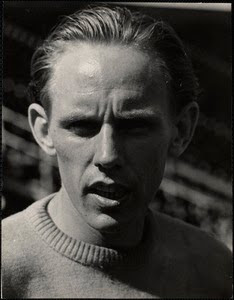
How Frank Shorter,Bill Rodgers, and Alberto Salazar
Made Running Go Boom" by Cameron Stracher
Houghton Mifflin Harcourt
Boston New York
2013 224 pages
listed at $25

I just knocked off this fairly quick read on the halcyon days of road racing ie.1972 when Frank Shorter won the Olympic marathon in Munich until 1982 at about the time of the death of Jim Fixx. Shorter's win woke us up to the sport. Billy Mills' and Bob Schul's Olympic victories didn't quite have the effect that Shorter did. In that period distance running particularly on the roads of America came from nowhere, no money, no race sponsors, no agents, and a total amateur dedication by the top guys in the sport, to being a commercialized growth industry funded by marketeers for running and health products. Tom Osler once said that, " In 1960, if you put your mind to it, you could personally know every marathoner in the country." The only marathons were Boston, Yonkers, and Culver City and the once every four years Olympic trials.
Stracher does a literary draft on the running careers of Frank Shorter, Bill Rodgers, and Alberto Salazar citing each man's succession to the throne of American and international road racing. The rise and fall of Frank, Bill and Alberto is an interesting read to someone who was racing in those years. The Boston and New York marathons and the Falmouth road race on Cape Cod sit at the center of the discussion with Fred Lebow and Tommy Leonard , conceptualists of the New York marathon and Falmouth on the periphery. There are some behind the scences acts played out on the pages that Stracher culled from personal interviews with the three runners and Leonard and others. Lebow was already gone when the writing was done.
Today's active younger runner might find little to comprehend here, and that is the point that Stracher tries to make in the last chapters. The points are that the mobs of people 'doing' marathons these days are not at the starting line to run or race. They are there to complete the distance. They for the most part don't even care who won the race, they care about having survived and crossed the line. In 1978, to qualify to run Boston, one must have run a sub 2 hrs. 50 minutes marathon in the 365 days prior to the race. My memory wants to believe it only cost about $10 to run at Boston. The only other way into the Boston field was being a member of some medical association. That was it. In 1980 the median pace in US marathons was 3 hrs 32 min. 17 sec. In 2011 it was 4 hrs. 16 min. 34 sec. When the Boston Marathon got blown up 4 hours into the race, the runners were long past the finish line. It was the families of the pedestrian participants who got hurt.
With the advent of sizable monetary prizes, the East Africans have come and taken all the money home. The US has only produced a few Olympic medals in the distances since 1982, Joan Benoit Samuelson in 1984 and Galen Rupp at London in the 10,000 meters last year. In other words our top runners are earning more and producing less. True they are earning nowhere near what football, baseball, basketball, tennis and golfers earn, but the product for the most part has greatly diminished. The last time the US had a chance to dominate distance running at an Olympic games was 1980, and we and a host of other nations decided to boycott that games in Moscow because of the Soviet invasion in Afghanistan. Ironically we are occupying Afghanistan today, letting go of Iraq, and looking for another enemy somewhere under the bed. Nobody is boycotting us today. They are still coming here for the money.
Clearly Cameron Stracher is a runner who happens to also be a writer who loves to tell a story.
George Brose